
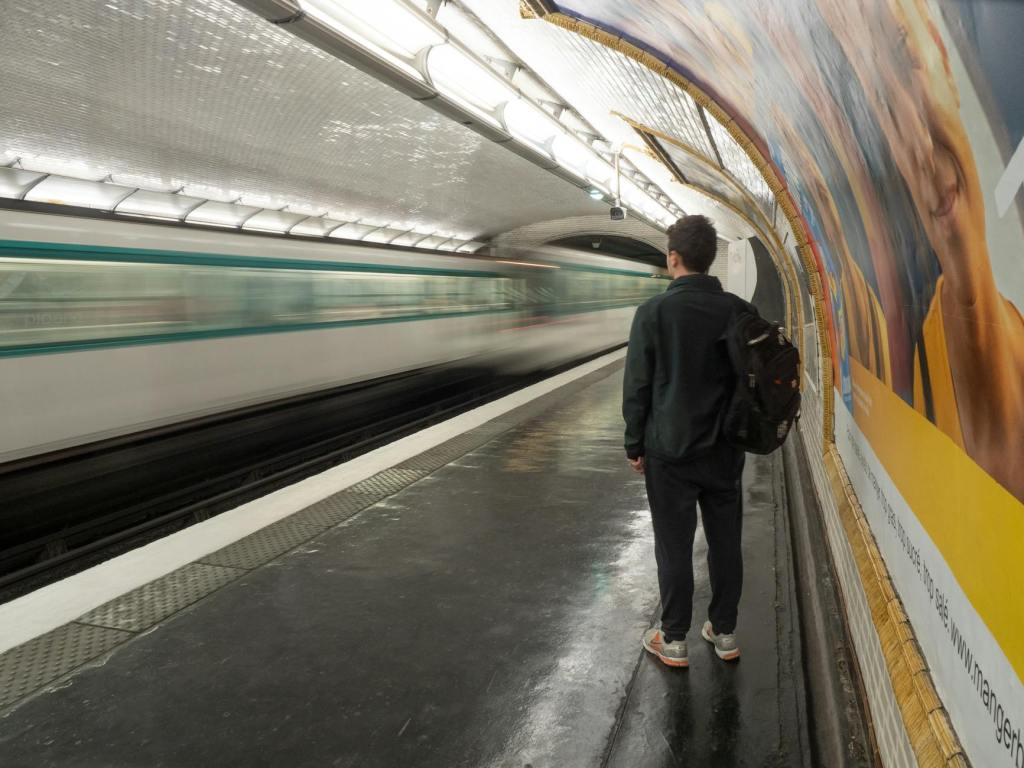
My wife and I were lucky enough to visit Paris recently, keen to see as much as we could in our short visit, and the Paris Metro was the obvious tool of choice to get around. The Paris Metro map is daunting at first as it aligns with the complex city template above, with layers of various town planning approaches on top of medieval street layouts. After the experience of using it, however, it works! It successfully serves the city planning and organization (no matter how complex) above. Literally – you can find a station within a short walk from wherever you are and get to wherever you want to go. A couple of changes might be required but the efficiency of the system and regularity of trains means that this experience (customer journey) is virtually seamless and well directed – especially with real-time and very accurate digital tools like #Citymapper to assist. This points to the thinking of some of the new enterprise design approaches like #EDGY, where the assets within the architecture (physical trains and network and digital support tools) are used to deliver a product via a customer journey in such a way that the brand experience is enhanced due to a satisfied passenger.
In contrast to the Paris metro, Melbourne’s train network (where I am from) is designed with arterial lines, spanning out from a central loop like spokes to the distant suburban sprawl of the city. This is great if you live near one of the arterial lines – not so good if you live a bit further out (where the spaces are widest between the spokes) and need to travel by some other means (like a bus or your own car) to reach a station. From a systems design approach, maybe Melbourne’s network is nice; the spokes are well organised and historically the city has expanded nicely along these ‘fingers’ out into the suburban fringes. It is also certainly easier to understand and manage. However, today the customer journey / experience is vastly different depending on where you live. Moreover, the experience is only deteriorating as population growth continues to spread out within the wide spaces between the arterial lines. In Melbourne the system design constraints now no longer serve the needs of the customer.
the system design constraints now no longer serve the needs of the customer
Ok, I know it’s quite a stretch to try and compare a medieval European city with 188 year old Melbourne, however, the point is about the need for architecture to evolve and to remain focused on the delivery of a product that serves customer needs. The Paris metro has adapted to the constraints of the city above and is designed to achieve optimal customer satisfaction – a short walk to a station that quickly and efficiently gets you to wherever you want to go. An additional strength of the Paris metro is inherent redundancy. You can, in many cases, choose two or even three stations (on different lines) that will take you close to your destination. In the end, the Paris metro has been designed and built to deliver a product to customers (the actual architecture of Paris – the Louvre, Arc de Triomphe, Eiffel Tower, etc, etc). This focus must have been the strategic goal from 1900, when first opened, up until the last line was completed in the late 1990’s.
Architecture needs to evolve over time – we can look at Paris as a mature, fully evolved example. Melbourne’s rail network is now also expanding to adapt to the changing needs of the city: the Suburban Rail Loop [1] will bridge the gap between arterial lines, and the Metro Tunnel will relieve some of the peak hour commuter challenges (again due to all journey’s beginning in the center and heading out via arterial lines) and add much needed capacity and choice of access points to passengers (improved customer journey). This will hopefully begin a much needed evolutionary approach to managing the transport needs of the city.
We need to apply the same evolutionary and fit-for-purpose approaches to architecture – from #SMEs to the largest, systems and processes need to adapt to support the delivery of products to ensure customer satisfaction, instead of creating initial short sited management gains while at the same time introducing long term constraints.
[1] Funnily enough in the 1890’s Melbourne did in fact have an outer circle rail line that traversed many suburbs that today are far from existing train lines and also shorter lines and extensions which through the decades were closed.

Leave a comment